
A 7kW home EV charger is usually the sensible starting point if your home has a single-phase electricity supply and the car is parked overnight. A 22kW charger can be useful when you have a suitable three-phase supply, a car that accepts faster AC charging and a genuine need to recharge in less time. Buying the higher-rated wallbox alone won’t make charging faster.
Before comparing prices, check three things together: the electricity available at the property, the car’s AC charging limit and how much energy you need before your next journey. Here’s how to make that comparison without paying for capacity you can’t use.
7kW, 11kW and 22kW: what can your home and car use?
The “7kW” category commonly includes chargers rated at 7.4kW. These normally use a single-phase supply. Charging at 11kW or 22kW normally requires three-phase power and a vehicle that supports it. The Planning Portal’s charger guide explains why many UK homes are limited to the single-phase option.
Your installer should confirm the supply type and available capacity. Don’t remove covers or seals to investigate electrical equipment yourself. Having three-phase power also doesn’t mean all of its capacity is available for the car.
The vehicle can be the tighter limit. Check the specification for your exact model, model year and any optional onboard charger. Look for AC charging, not the much larger DC rapid-charging figure advertised for motorway stops. They are different charging arrangements.
For example, Tesla’s UK Wall Connector guidance, checked on 19 October 2026, lists a wallbox output of up to 22kW but shows 11kW on a suitable three-phase supply for the vehicles in its current charging table. That illustrates why a 22kW wallbox need not deliver 22kW to the car.
An 11kW-capable car can still benefit from a suitable three-phase installation compared with 7.4kW. The gain is about 49% more charging power, not three times the speed. A car limited to 7.4kW AC won’t gain charging speed simply by plugging into a 22kW unit.
Compare the daily top-up, not just a full battery
A large car battery doesn’t necessarily mean you need a large charger. What matters most is the energy used between charging sessions and the time available to replace it.
Hypothetical example: suppose a day’s driving uses 18kWh from the vehicle battery. Assuming 90% efficiency from the AC supply into the battery, charging needs 20kWh of electricity: 18 ÷ 0.90 = 20.
At a steady 7.4kW, that takes about 2 hours 42 minutes. At 11kW, it takes about 1 hour 49 minutes; at 22kW, about 55 minutes. Those faster figures apply only if the vehicle and installation can sustain the stated power.
For a larger 45kWh top-up into the battery, the same assumptions give 50kWh from the supply: approximately 6 hours 45 minutes at 7.4kW, 4 hours 33 minutes at 11kW or 2 hours 16 minutes at 22kW.
These are illustrations, not promised charging times. Temperature, vehicle controls, battery condition and household load management can change the result. The Energy Saving Trust’s charging advice also explains how the vehicle limits the power it can receive.
Use your normal driving pattern first, then test your busiest realistic day. If the car sits on the drive for ten hours, saving an hour on an ordinary top-up may have little practical value. If you regularly return late and leave early, it could matter.
Will faster charging fit your electricity supply?
A survey needs to account for other large loads, such as an electric shower, heat pump, second EV or home battery charging from the grid. It should consider the electrical installation and cable route as well as the incoming supply.
Dynamic load management can reduce the EV’s charging rate when the rest of the home needs more power. Tesla’s power-management explanation gives one manufacturer’s example of this using additional metering. Other chargers have their own requirements, so ask what equipment and setup are included.
Load management makes better use of the available supply; it doesn’t create extra capacity or turn single-phase power into three-phase power. Ask what charging rate is realistic while other overnight loads are running, rather than treating the wallbox’s maximum as a guaranteed continuous output.
If a supply upgrade is needed, get its scope, cost and likely timing confirmed before ordering around a 22kW target. Your installer should identify the network operator’s requirements. The government’s energy-device registration guidance distinguishes installations that can be notified afterwards from those needing approval beforehand.
When is a 22kW-capable installation worth considering?
It deserves a closer look when three-phase power is already available, your car can accept 11kW or 22kW AC, and your charging window is regularly tight. Compare the extra installed cost with the time you would actually save.
For two EVs, think about how both will be charged. One faster socket still serves one car at a time. Depending on the supply and equipment, coordinated charging across two chargepoints may be more convenient than moving cars or swapping a lead late at night.
If an off-peak tariff is part of your plan, check its current hours and vehicle or charger eligibility. Faster charging may fit more energy into an eligible window, but it doesn’t create a cheaper unit rate. Compare the whole tariff and installation cost; don’t assume a supply upgrade will pay for itself.
For solar, the charger’s maximum rating is separate from its ability to follow spare generation. Our guide to charging an electric car with solar panels covers that decision. Likewise, tethered versus untethered charging is mainly about cable convenience, not a shortcut to higher power.
Get a quote based on your car and your home
Ask for a quotation that identifies the charger model, expected charging power, electrical work, any load-management equipment and network requirements. Compare complete installations, not just wallbox prices.
Sunergy Renewables provides home EV charger installation from Nuneaton across Warwickshire, Leicester, Leicestershire and the wider Midlands.
Ask Sunergy for an EV charger quotation. Send your postcode, exact car model, usual mileage, arrival and departure times, and details of any solar, battery or planned second EV. We can then assess whether 7kW meets your routine or whether a faster installation offers a useful benefit.
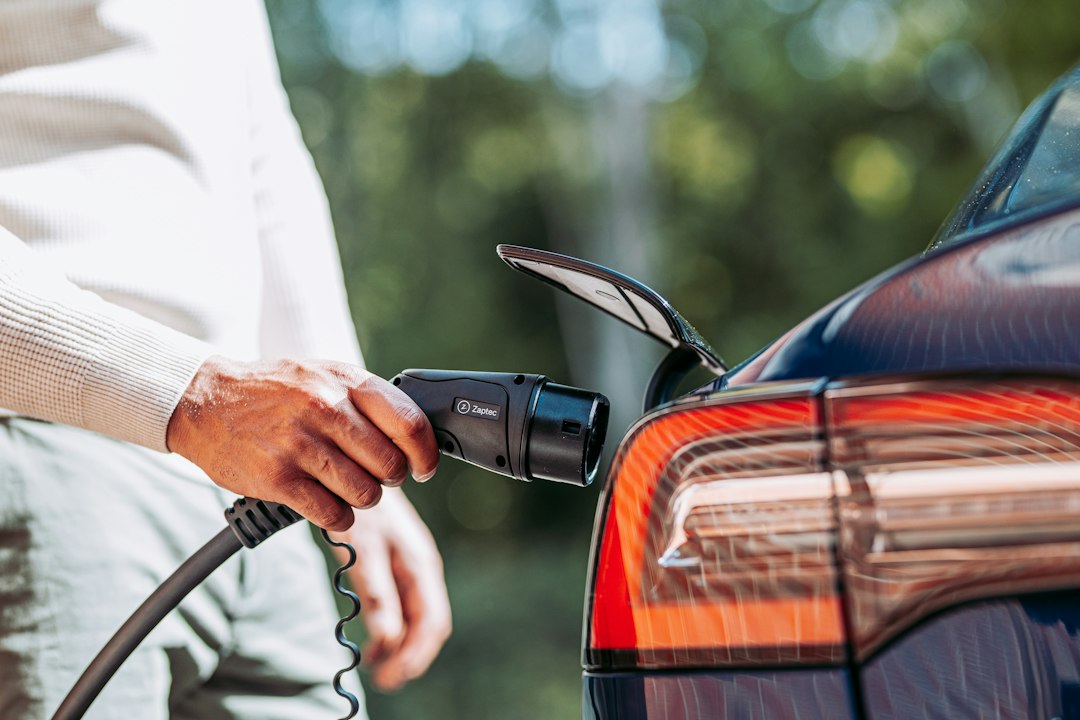
Featured photo: Zaptec on Unsplash. Stock photograph for illustration, not a Sunergy installation.